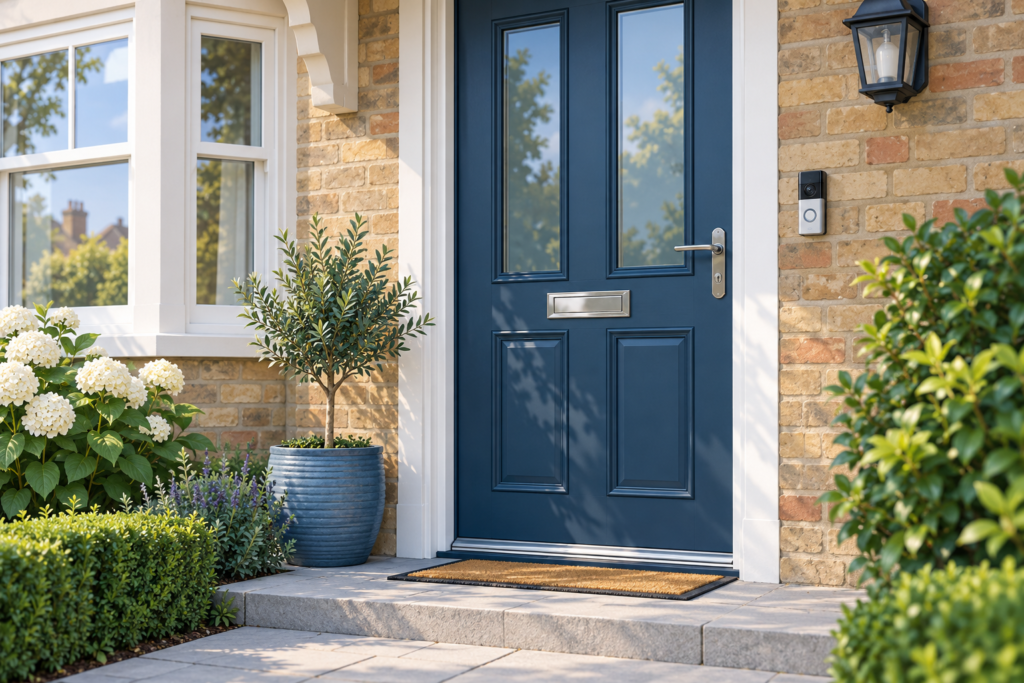
A doorway picture that looks useful in daylight may look different after dark. A calm evening check helps you describe what the installed camera actually shows, rather than relying on a product photograph or a daytime demonstration.
Choose a dry, manageable time and stay at safe ground level. This is an observation exercise. You do not need to climb, adjust the camera housing or change electrical fittings to make a useful note.
1. Use a willing adult in the usual calling position
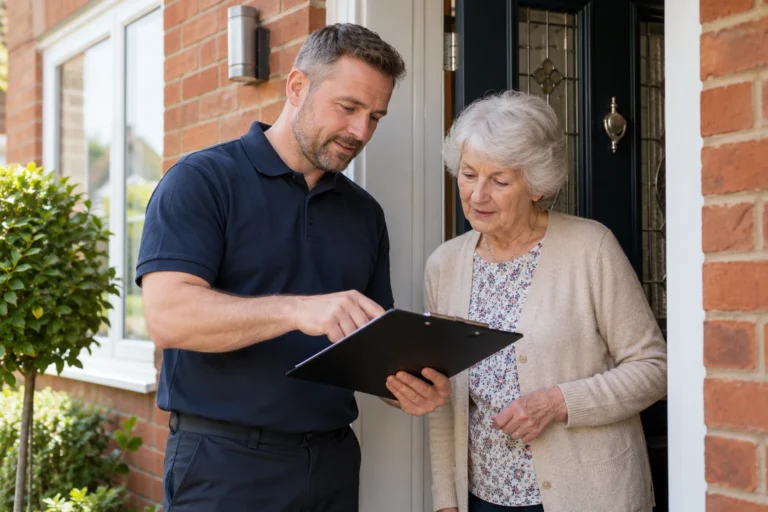
Ask someone you trust to stand where a visitor normally waits after ringing. Explain the check beforehand and let them choose whether to take part. The resident can view the picture from their usual phone or indoor screen, where supported.
Check the ordinary position first, rather than asking the person to stand in the one place where the image happens to look best. Can you see the area you wanted to see? Is a door frame, hanging basket or other object obscuring an important part?
If useful and safe, ask the helper to move a short distance along the normal approach. Keep it brief and avoid involving passing neighbours or recording people simply to test identification. A camera picture should not be treated as proof of a caller’s identity.
2. Look for changes in light and reflections
Observe the picture with the entrance lighting in its usual state. Where an existing light can safely be operated with its normal switch, compare the view when it is on. Note what changed rather than assuming more light must produce a better image.
Look for a bright patch, a face that is difficult to see, reflections from nearby surfaces or something close to the camera that dominates the picture. An intermittent issue may coincide with passing headlights or another changing light source; record that as an observation, not a diagnosis.
Ask which night-view functions the proposed model supports. Colour, lighting requirements and image detail vary. A feature name alone does not establish how useful the view will be at your doorway.
3. Write down the specific difficulty
A short note helps an installer distinguish a view problem from a connection or display problem. Use these prompts:
- Date, approximate time and weather: ______.
- Camera and viewing device used: ______.
- Where the willing helper stood: ______.
- Normal lighting, and any comparison tried: ______.
- What was difficult to see: ______.
For example, “The doorway was visible but a bright reflection covered the area beside the bell” is useful. Avoid recording that the camera “cannot identify anyone” from one brief check. Equally, recognising a familiar helper does not guarantee that every future caller will be recognisable.
Keep any example image private. Ask support whether an image is needed and agree a suitable way to provide it before sending footage containing people or neighbouring spaces.
4. Ask for an appropriate adjustment
Take the observations to the installer. Ask whether the camera position, supported settings or existing lighting need professional attention. Have any proposed change explained in relation to the original purpose and the privacy of neighbouring areas.
Do not climb on furniture, lean out of windows, open powered equipment or rewire lighting. If physical work is needed, arrange suitable help. A change that improves one part of the picture may affect another, so ask how the final view will be reviewed.
Our camera coverage guide and doorbell comparison explain related questions to take to the discussion.
Call Home Care Security on 0333 666 1983 to ask about the night-time view of the specific camera being proposed or to discuss the observations from your existing setup.