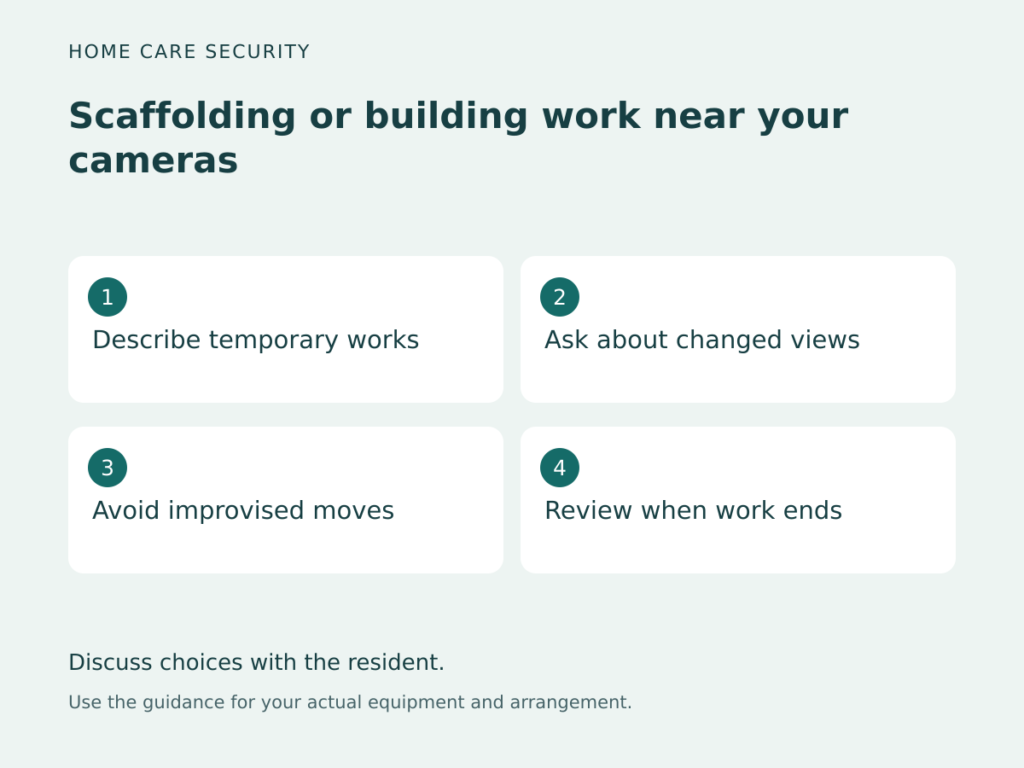
Your camera view during building work can differ from the view you agreed at installation. Poles, sheeting, materials and temporary access arrangements may change the scene. Discuss that before building work starts instead of moving equipment yourself once an obstruction appears.
This checklist is for the resident's planning conversation with the builder and security installer. It is not a scaffold inspection or a guide to working at height. Keep observations at ground level and leave access equipment, wiring and camera adjustments to suitable people.
Tell the builder about existing equipment
Identify the cameras, doorbell and accessible cable routes from the installation paperwork. Explain which entrance the resident normally uses and which view they rely on for an ordinary visitor check.
If you do not know how equipment is connected, leave that as a question. Do not remove covers or climb to read a label. Ask the builder to identify any part of the planned work that could affect the mounting area, power, connection or access for maintenance.
Give only the information needed for the work. Contractors do not automatically need app access, camera passwords or recordings. Agree any proposed access separately with the resident and the legitimate account owner.
Describe the temporary change
Ask what will stand near the camera and for approximately how long. Record what is known about scaffolding, protective sheeting, material storage and changed visitor routes. If the programme changes, update the discussion rather than treating the first date as fixed.
- Which view or entrance may be affected?
- What structure or material is expected nearby?
- Will normal equipment access be restricted?
- Who should be contacted if the picture changes?
- Who will confirm the arrangement after the work ends?
A written description may be enough initially. If a photograph is requested, take it only from a safe position and avoid including neighbours, private interiors or unnecessary personal information.
Do not improvise a new camera position
If the intended view is obstructed, ask the security installer whether a suitable temporary arrangement is possible. The answer depends on the equipment and work. Do not mount a camera on scaffolding, extend a cable or point it into a new area without appropriate assessment and permission.
A temporary position still needs a clear purpose and consideration of nearby privacy. Consult current ICO guidance where coverage reaches beyond the home's boundary. A building project does not make every additional view necessary.
Our camera coverage guide can help explain what you want to see. Avoid asking for a promise that a temporary setup will provide complete security during the works.
Keep the resident's ordinary routine workable
Discuss how expected visitors will announce themselves if the usual entrance or doorbell is unavailable. Keep the arrangement simple and familiar. A family member may help organise it, but do not assume they will continuously watch the camera.
Check the agreed routine with the resident before work starts. If they prefer not to answer an unexpected caller, that choice remains available. Do not share access codes, health details or household absence times in public signs.
For any planned interruption to the security system, ask what functions may be unavailable. Treat local viewing, recording and remote alerts as separate questions. Use the support section to prepare questions without assuming which features continue.
Report a changed view safely
Use the normal authorised screen to describe what changed. “Sheeting now covers the left side of the front entrance view” is more useful than “the system is useless”. Note the date and which part of the everyday task is affected.
Do not climb the scaffold to clear the view or ask an unqualified helper to reach the camera. HSE guidance emphasises competent people and properly planned work at height. Your household observation does not replace the contractor's responsibilities or a professional inspection.
If equipment appears damaged, avoid touching it or its wiring. Inform the responsible contractor and appropriate technical support, describing only what you can observe safely.
Arrange the return check before the job closes
When scaffolding or materials are removed, ask for any agreed camera work to be checked. Confirm the intended view and practise the ordinary functions included in the system. A clear picture does not alone verify recording, alerts or account permissions.
Keep a short record of temporary changes and whether they were reversed or made permanent by agreement. If something remains unresolved, name the person responsible for the next step rather than assuming another trade will deal with it.
Ask Home Care Security what support is available before work near your equipment begins. Provide the model if known and a brief description of the planned work, without account credentials or private recordings.
Sources
HSE work-at-height guidance and ICO home CCTV guidance. The relevant contractors must assess the actual work and equipment.