Doorbell cameras and Christmas decorations can share an entrance, but check the ordinary view before treating the display as finished. A wreath, hanging sign or string of lights may sit differently from where you expected. Start with what the resident wants the doorway to look like and how they normally check visitors.
This is a ground-level observation checklist, not a guide to fitting lights or moving security equipment. Leave work at height, wiring and camera adjustments to appropriate help. Follow the instructions for both the decorations and the installed equipment.
Start with the usual doorway view
Before decorations go up, open the authorised camera view in the normal way. Note the area you use to check a caller: the approach, the place beside the bell or the doorstep itself. You do not need to save private footage to make a comparison. A short written description may be enough.
Ask the resident which parts of their normal routine must stay easy. Can a visitor find the bell? Does the resident know which indoor sound to listen for? Is there a clear route to the door? Keep those questions separate from whether a display looks attractive.
If the existing view already causes difficulty, record it before adding anything. Otherwise a later problem may be wrongly attributed to the decorations. Our camera coverage guide explains the wider questions to discuss with an installer.
Check the display from a safe position
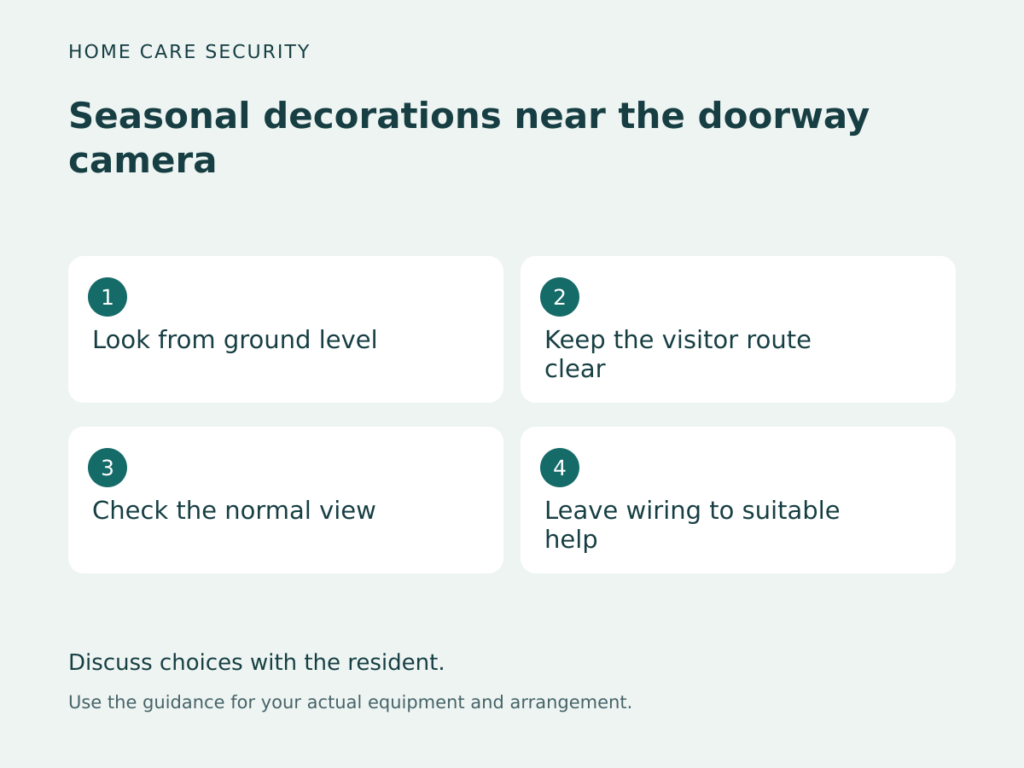
Look at the decorations from ground level and then at the camera image. A decoration that seems clear of the lens from the pavement may still occupy part of its view. Do not reach up to move the camera or drape decorations over its housing, cables or fittings.
Ask a consenting helper to stand where an ordinary visitor would wait. Check whether the intended part of the entrance remains visible. If the resident wants to test the bell, agree one ring so nobody mistakes the rehearsal for an unexpected visitor.
- Can the helper find and reach the usual bell?
- Is the expected part of the visitor's position visible?
- Does the normal indoor bell or supported notification behave as expected during this test?
- Are decorations or cables crossing the ordinary route to the entrance?
- Is there anything that needs suitable professional attention rather than a quick adjustment?
A successful test describes that moment only. It is not a promise that every visitor or notification will be clear in every condition.
Compare the view after dark
Decorative lighting may make the scene look different after dark. Check the normal camera view again from indoors at a convenient time. Describe what you see rather than diagnosing a technical cause: “bright patch beside the bell” is more useful than “the camera is faulty”.
For example, a fictional household notices that an illuminated hanging sign fills the upper part of its picture. The useful next step is to discuss the decoration's position with the person responsible for it, then check again. It is not to change the camera's settings at random or assume a new camera is needed.
Where equipment adjustments appear necessary, ask the installer about the exact system. Our existing guide to checking the doorway picture after dark provides a separate observation routine.
Keep electrical questions separate
Electrical Safety First advises following the light manufacturer's instructions, checking suitability for outdoor use and avoiding damaged lights and trailing-wire hazards. A clear camera image does not show that a lighting installation is electrically safe.
Do not attach decorations to camera wiring or use security equipment as a convenient fixing point. If you are unsure about the power arrangement, stop and seek suitable advice. Do not open fittings, alter connections or climb to investigate for the sake of completing this checklist.
Keep a short note and review after removal
A useful note contains the date, the decoration added, what changed in the ordinary view and who will deal with an unresolved question. Leave household absence dates, access codes and private routines off any public sign or shared photograph.
When decorations come down, check the normal view and doorbell routine again. Look for anything left hanging or obscuring the intended scene. If a professional made an agreed temporary adjustment, ask whether a return check is needed rather than trying to reverse it yourself.
Three questions that are easy to overlook
Should we change alert settings because decorations move? Not without first understanding the observation and the available controls. Note which alert arrived and what was happening at the time. Do not assume a decoration caused it simply because both were present. Ask for model-specific advice if the pattern is troublesome.
Can we temporarily point the camera somewhere else? A different view can introduce new privacy and coverage questions. Do not improvise a move. Describe the problem and ask whether the decoration can be placed elsewhere without affecting the equipment. Any camera adjustment should be agreed and suitable for the installation.
What if the resident does not want a test? Respect that choice. You can record the unanswered question and arrange a convenient discussion instead. A family member's wish to finish the display does not make an unannounced doorbell rehearsal necessary.
Keep the final decision small and specific: decoration left in place after an agreed check, decoration repositioned by suitable help, or an unresolved equipment question referred to the installer. Avoid writing “security checked” when the only observation was one camera picture.
Need advice about the camera view? Contact Home Care Security with the equipment details and a plain description of what changed. Do not send private recordings unless a suitable method has been agreed.
Source
Electrical Safety First Christmas lights guidance. Use the actual product instructions for installation and electrical questions.