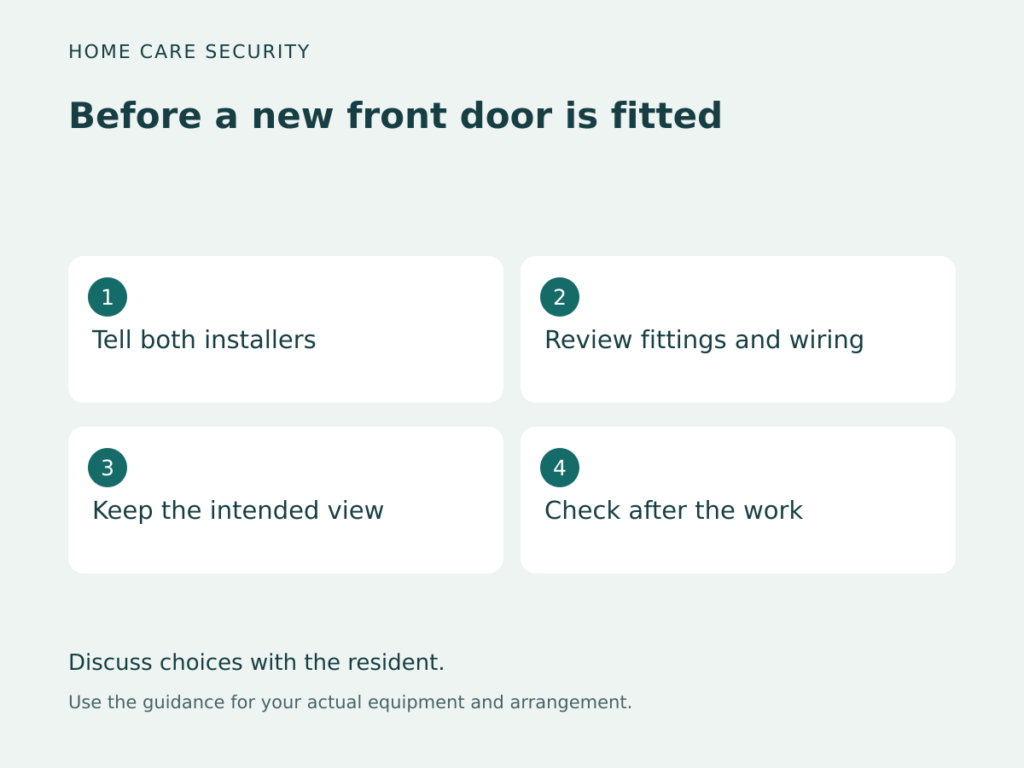
New front door and video doorbell planning should happen before the old door is removed. Tell the door supplier and security installer about the existing equipment, the view the resident uses and any wiring or fittings near the frame.
The aim is to avoid leaving one trade to discover another trade's equipment on installation day. This is a coordination checklist, not advice for moving a camera or altering wiring yourself.
Describe what is already there
Use the installation paperwork and a safe ground-level look to identify the doorbell, camera, chime or other equipment involved. Record the model if it is available without reaching, climbing or opening anything.
Note whether equipment is fixed to the door, frame or nearby wall. If you do not know where a cable goes, say so. Do not pull it, remove a cover or test a connection to make the description more complete.
Explain which ordinary task matters to the resident. They may want to see a caller from a familiar chair or use a particular indoor sound. Keep those practical needs in the discussion, not just the physical location of the camera.
Ask each contractor what falls within their work
Ask the door supplier whether its proposed work affects the equipment, wiring or mounting area. Then ask the security installer what assessment or attendance is needed. Do not assume either quotation includes removing and reconnecting the other equipment.
- Who will assess the current fitting before work begins?
- Who is responsible for any necessary disconnection and reconnection?
- Does the new door or frame change the proposed mounting options?
- What making good is included?
- Who will test the agreed functions afterwards?
- What happens if the planned arrangement proves unsuitable?
Keep the answers with the written quotations. An informal assurance that “it should be fine” does not identify who will do the work or what is included.
Review the intended view
A new frame, side panel or door design may change the place available for equipment. Ask the installer to explain the intended view before agreeing a new position. Do not assume moving a device a short distance leaves everything else unchanged.
Think about where a visitor normally stands and how the resident uses the picture. Keep unnecessary neighbouring views out of the proposal and consult current privacy guidance where appropriate. The purpose is a useful, proportionate view, not maximum coverage.
Our guide to camera coverage can help frame those questions. Do not use a photograph of somebody else's doorway as proof that a position will work at yours.
Plan for the period when equipment is unavailable
Ask whether the doorbell or camera will be unavailable during any part of the job. Agree an ordinary visitor routine that the resident understands for that period. Do not rely on an app that has not been confirmed working.
Let expected visitors know the practical arrangement without sharing unnecessary household details. A simple instruction about which entrance to use may be enough. Avoid public notices revealing absence times, vulnerability or access codes.
For a flat or managed building, check any relevant permissions before changing the entrance arrangement. A front door can have requirements beyond appearance, so the responsible supplier or appropriate adviser should address those. Do not drill into a new door or frame without approval.
Make installation-day decisions explicit
Have the current written proposal available and identify who can approve a change. If a contractor discovers that the agreed position cannot be used, pause that part of the work and ask for the alternative to be explained.
A fictional example: the new frame leaves less space beside the entrance than expected. Rather than fixing the doorbell wherever it fits, the resident asks the installer to explain a revised position, its view and any additional work. The change is then recorded before it is accepted.
This is not a reason to delay necessary safe work or direct the contractor's technical methods. It is a way to avoid accepting an unexplained change to the agreed security arrangement.
Check the finished arrangement together
After the work, try the functions included in the installation with the resident's agreement. Check the intended view, normal doorbell interaction and indoor indication if supplied. Ask about recording and notifications separately where those features are part of the setup.
Open and close the door through its normal movement with the responsible installer present if they request it. Raise any concern about fittings, cables or operation without attempting an adjustment yourself. Leave technical and safety checks to the appropriate contractor.
Record the equipment position, any agreed change and the result of the handover. Keep new instructions with the original paperwork. Our support section provides a starting point for questions about everyday use.
Contact Home Care Security before the door project to ask what assessment or support is available for the existing setup. Confirm the scope rather than assuming coordination or refitting is included.
Reference
The actual door specification, equipment instructions and contractor scope must govern the work; no technical compatibility or installation outcome is promised.