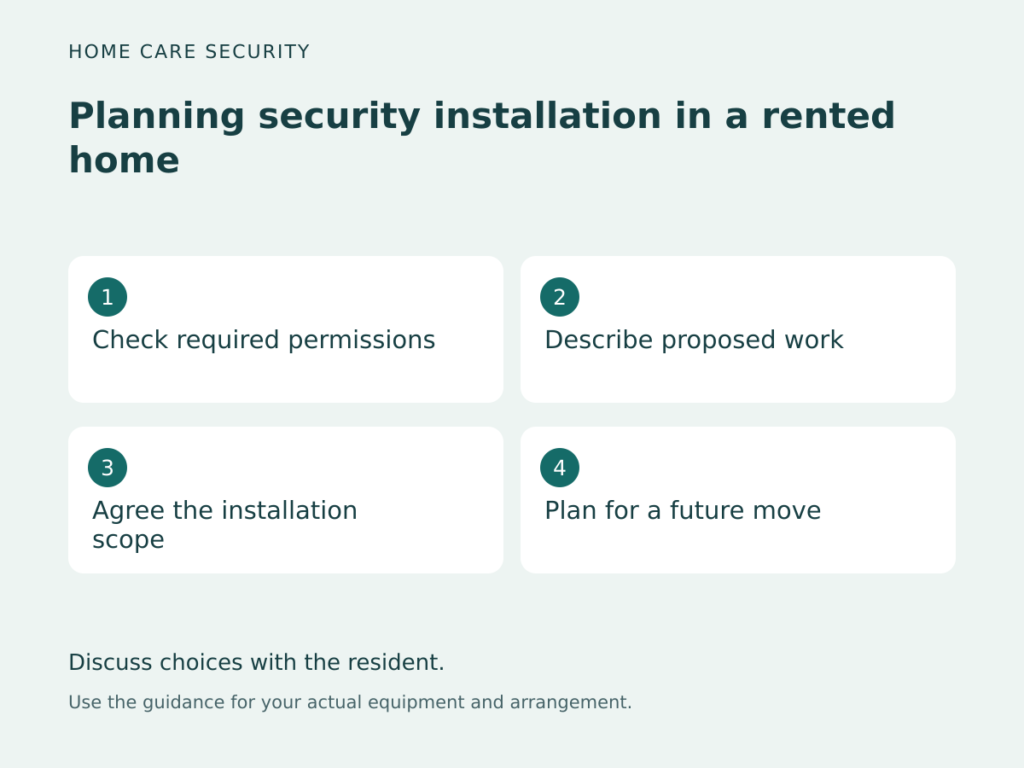
Security camera installation in a rented home needs a clear work proposal and a permissions check before anything is fixed to the property. Start with the resident's purpose, then ask the landlord or relevant property manager about the actual equipment, position and installation work.
This guide helps you prepare that discussion. It does not decide what your tenancy allows or give legal advice. Requirements can differ by agreement, property and UK nation. A shared entrance or external wall may involve people beyond the landlord who handles your usual enquiries.
Describe the purpose before choosing equipment
Write down the ordinary task you want help with. Perhaps the resident wants to see a caller before answering the door. That is more specific than asking for “full security”, and it helps everyone understand why a particular position is proposed.
Keep the person living there involved. A relative offering to pay does not automatically decide the views, family access or installation date. Ask which choices the resident wants to make and which discussions they would like help with.
Our guide to planning camera coverage provides useful questions about entrances and intended views. Avoid assuming a rented property needs more equipment than an owner-occupied one.
Check the agreement and the right decision-maker
Find the clauses or written guidance about alterations, external fittings and improvements. If the wording is unclear, ask the landlord or relevant adviser before accepting installation work. Keep the response with the proposal.
Do not assume an agent's informal comment settles every permission. Ask who has authority to approve the work and whether any further building-management approval is needed. For a flat, be especially careful about communal walls, entrance doors and shared areas.
Tenancy and leasehold arrangements are not interchangeable. Official Leasehold Advisory Service guidance explains that lease terms can restrict alterations, including external CCTV. If your situation involves a lease or shared building, obtain advice for that arrangement rather than applying a general household checklist as a legal answer.
Make the physical proposal clear
Ask the installer for enough information to explain the work. A product name alone will not show where holes, cables or power arrangements may be needed. Keep any plans or photographs private and limited to what the recipients need.
- Equipment model and proposed position.
- Area the camera is intended to show.
- Proposed fixings, cable route and power requirements.
- Any effect on doors, frames, walls or shared parts.
- Who will carry out the installation and making good.
- What happens when the tenancy ends or equipment is removed.
These are questions for the responsible parties, not DIY instructions. Do not test a fixing or move wiring while waiting for permission.
Discuss privacy separately from building permission
Approval to attach equipment does not answer every question about recording. Consider what the view includes and ask for current guidance where it extends beyond the property's boundary or into communal space.
The ICO's home CCTV guidance is a starting point for privacy responsibilities. Do not assume that landlord approval makes any camera position acceptable, or that being a tenant means you cannot ask questions about somebody else's camera.
Keep the proposed purpose proportionate. Avoid private neighbouring spaces where they are not needed for the task. Ask the installer about suitable views and any supported privacy controls without assuming those controls remove all responsibilities.
Agree removal and costs before work starts
Ask who owns the equipment and who is responsible for any agreed removal or making good. If someone promises that everything can be taken away without leaving a mark, ask how that applies to the actual installation rather than relying on the description of a different product.
Keep cost and permission questions separate. An affordable quote is not evidence that work is authorised. Written permission is not evidence that every charge, support visit or future removal is included in the price.
A simple comparison sheet can label each item “included”, “not included” or “awaiting answer”. Do not turn an unanswered item into an assumed zero cost.
Use a clear go or hold decision
Before agreeing a visit, check whether the intended work, permission and resident's choices match. If the position changes after approval, ask whether the permission needs updating. Do not treat consent for one location as consent for a different one.
For example, a fictional tenant may have approval for a particular doorbell position but later be offered a separate camera on a communal wall. The useful next step is to clarify that changed proposal, not assume the first approval covers it.
Ask about a home assessment once you can explain the property and permission questions. Or contact Home Care Security to discuss what information is needed before considering an installation.
Sources
Leasehold Advisory Service alterations guidance and ICO home CCTV guidance. Seek tenancy-specific advice before treating a proposed installation as authorised.